
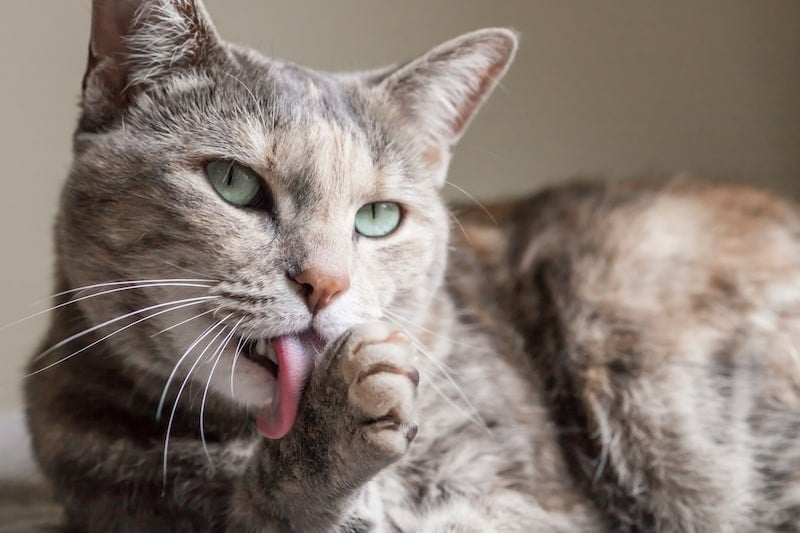
Hairballs are a common problem for cats, rabbits, and rodents. Most cats lick and groom their coats much more often than dogs, and in the process, they ingest a lot of hair. This is especially true for long-haired cats with fine fur.
Cats are adept at cleaning their fur and making it neat and shiny using their tongues, which contain hook-like protrusions that help get rid of fallen and dead hair and stimulate the sebaceous glands in the skin layers to secrete an oily substance that gives the cat's fur a shiny and clean appearance. This process results in the formation of hairballs inside the stomach.
What are hairballs?
While cleaning their fur with their tongues, cats swallow loose and dead hair, and the bristles collect inside the stomach to form hairballs, which is normal in cats.
Cats get rid of hairballs in feces or by regurgitating and expelling them from the mouth in the form of vomit. Contrary to their name, hairballs are not spherical in shape; they are slightly elongated as a result of passing through the esophagus during expulsion.
Do hairballs cause health problems for cats?
Dry coughing or vomiting are common signs of hairball regurgitation in cats. Large hairballs can cause intestinal obstruction, which can be life-threatening for the cat.
How can you help your cat get rid of hairballs?
1- Using special cat food. There are different types of cat food and treats specially formulated to improve the functions of the digestive system and help it expel hairballs in cat feces. It also helps improve the quality of the hair and reduce shedding, making the hair healthy and shiny. Consult your doctor about the best cat food for hairballs.
Therefore, we have dedicated the seventh bird to you:
- Dr. Clouders Anti-Hairball Lotion
- Royal Canin Herbal Dry Cat Food
- Royal Canin Herbal Wet Cat Food
- Sanal Cat Treats: Herbal Barley Cups
- Royal Canin Dry Cat Food for Skin and Coat Care
- Herbal Control Gel for Digestive Support for Cats by Fits Plus Best
2- Brush the cat daily and regularly to remove dead and fallen hair to reduce the chances of the cat swallowing fallen hair during self-cleaning.
Therefore, you might need the seventh bird :
- Seven Bird Double-Sided Hair Removal Brush for Dogs and Cats
- Seven Bird Self-Cleaning Hairbrush for Cats and Dogs
- Seven Bird 4-in-1 Grooming, Massage & Hair Removal Comb for Dogs and Cats
- Petlove Healthy Fur Moisturizing Cream for Dogs and Cats to Soften and Style Fur
3- Trimming the hair, especially for long-haired cats. It is preferable to trim or shave the cat's hair every 6 months to reduce hair loss in cats.
Therefore, we have dedicated the seventh bird to you:
4- Preventing the cat from constantly self-cleaning and finding a fun way for the cat to help reduce excessive hair cleaning and decrease the chances of hairball formation.
Which cat breeds are prone to developing hairballs repeatedly?
Hairball formation is normal in cats, but there are some factors that contribute to the continuous formation of hairballs, including:
1- Long-haired cats, such as Persian cats, or those that shed a lot of hair, are prone to the continuous formation of balls.
Therefore, you may find in the seventh bird :
2- Cats become more experienced in grooming their fur as they get older, so they are prone to constantly forming hairballs.
3- Some cats clean too much, which makes them prone to constantly forming hairballs.
When should you go to the vet?
A veterinarian should be consulted if the following symptoms are observed:
- Vomiting or coughing continuously without the hairball coming out.
- Loss of appetite.
- Inactivity
- Constipation
- Increase in abdominal circumference
- These symptoms may be associated with intestinal obstruction and pose a risk to the cat's life, therefore surgical intervention is necessary to remove the hairball.
What are the ways to prevent hairballs in cats?
- Regular and daily brushing of the cat's fur to get rid of excess, shed hair.
- Make sure the cat drinks enough water to help the stomach and intestines get rid of the hairball and improve bowel movements.
- Feeding the cat a healthy, high-quality diet rich in protein and consistent with its daily needs is essential. Malnutrition leads to hair loss and increases the chances of hairball formation.
- Giving cats nutritional supplements containing psyllium seeds can improve digestive function and aid in elimination.
- Giving cats catnip gives the body more fiber, which helps in the process of easily expelling hairballs with feces.
- It is not recommended to use nutritional supplements or medications without consulting a veterinarian to avoid any complications.